

Macular Degeneration: Symptoms, Causes, Diagnosis, and Treatment

Age-related macular degeneration (AMD) is a common eye condition that affects the macula, the central part of the retina responsible for sharp, detailed vision. The macula allows you to read, recognize faces, drive, and see fine details.
As AMD progresses, it can affect central vision and make everyday activities more difficult. While macular degeneration does not usually cause complete blindness, it can lead to significant vision loss.
AMD is most common in adults over age 50, and the risk increases with age. Regular comprehensive eye exams can help your optometrist detect signs of macular degeneration early and monitor changes in your eye health.
What Causes Macular Degeneration?
Age-related macular degeneration develops as changes occur in the macula over time. Several factors can increase your risk of developing AMD, including:
Age: The risk of AMD increases as you get older.
Family history: Having a close family member with AMD can increase your risk.
Smoking: Smoking significantly increases the risk of developing AMD.
High blood pressure and cardiovascular disease: These conditions may contribute to AMD risk.
Unhealthy diet: A diet lacking certain nutrients may increase your risk.
Long-term sun exposure: Protecting your eyes from ultraviolet (UV) light is an important part of maintaining long-term eye health.
Understanding your risk factors can help you and your eye doctor make informed decisions about monitoring and protecting your vision.
What Are the Types of Macular Degeneration?
There are two primary forms of age-related macular degeneration: dry AMD and wet AMD.
Dry Macular Degeneration
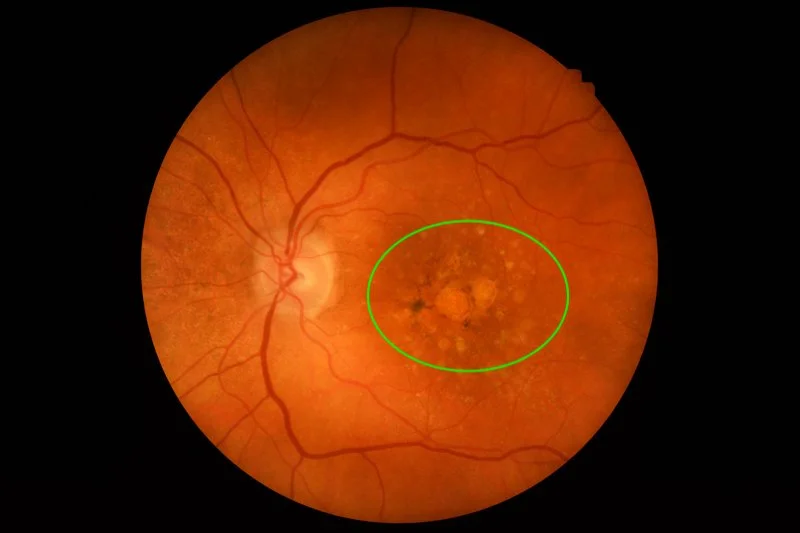
Dry AMD is the most common form of macular degeneration. It occurs when the macula gradually becomes thinner and less functional.
Small yellow deposits called drusen can develop underneath the retina. Some drusen can occur as part of normal aging, but larger or more numerous drusen may be associated with AMD.
Dry AMD often progresses gradually. In advanced cases, retinal cells can be lost, resulting in more significant changes to central vision.
Wet Macular Degeneration
Wet AMD is less common but can cause more rapid and severe vision changes.
With wet AMD, abnormal blood vessels can grow underneath or near the retina. These blood vessels may leak blood or fluid, damaging the macula.
Symptoms can include sudden blurry or distorted central vision. If you notice sudden changes in your vision, prompt evaluation by an eye care professional is important.
What Are the Symptoms of Macular Degeneration?
Early macular degeneration may not cause noticeable symptoms. This is one reason regular comprehensive eye exams are important, particularly for adults over 50 and people with risk factors for AMD.
Blurry or hazy central vision
Difficulty reading or seeing fine details
Straight lines appearing wavy or distorted
A blurry or dark spot in the center of your vision
Difficulty recognizing faces
Needing brighter light when reading
Colors appearing less vivid
AMD can affect one eye more than the other. As a result, vision changes may sometimes go unnoticed.
If you notice new distortion, waviness, or a change in your central vision, schedule an eye examination promptly.
How Is Macular Degeneration Diagnosed?
A comprehensive eye examination allows your optometrist to evaluate the retina and macula and look for signs of age-related macular degeneration.
Depending on your age, risk factors, symptoms, and examination findings, your eye doctor may recommend additional testing.
Dilated Eye Examination
During a dilated eye exam, your pupils are enlarged so your optometrist can examine the retina and macula more closely. This can help identify signs of AMD and other retinal conditions.
Optical Coherence Tomography (OCT)
Optical coherence tomography, commonly called OCT, is a non-invasive imaging test that produces detailed cross-sectional images of the retina.
OCT can help your eye doctor identify retinal changes, including thinning, fluid, and other abnormalities that may not be visible during a standard eye examination.
Fundus Photography
Fundus photography creates detailed images of the retina and macula. These photographs can provide a baseline for comparison during future eye exams and help your eye doctor monitor changes over time.
Amsler Grid Testing
An Amsler grid is a simple tool used to monitor central vision. If straight lines suddenly appear wavy, distorted, broken, or missing, contact your eye doctor promptly.
Can Macular Degeneration Be Prevented?
There is no guaranteed way to prevent age-related macular degeneration. However, healthy lifestyle choices may help reduce your risk or slow progression in people who already have AMD.
Protect Your Eyes From UV Exposure
Wear sunglasses that provide UV protection when spending time outdoors. A hat with a brim can also provide additional protection from sunlight.
Don't Smoke
Smoking is a significant risk factor for AMD. If you smoke, quitting can be an important step toward protecting your eye health and overall health.
Eat a Healthy Diet
A balanced diet that includes leafy green vegetables, colorful fruits and vegetables, fish, and other nutrient-rich foods can support overall eye health.
Manage Your Overall Health
Managing conditions such as high blood pressure and maintaining healthy lifestyle habits can benefit your overall health and your eyes.
Schedule Regular Eye Exams
Regular comprehensive eye examinations allow your optometrist to monitor your retinal health and identify potential problems before you notice symptoms.
What Treatments Are Available for Macular Degeneration?
Treatment for AMD depends on the type and stage of the condition.
For certain patients with intermediate or advanced AMD, specific vitamin and mineral supplements may be recommended based on clinical research. These supplements are not appropriate for everyone, so talk with your eye doctor before taking an eye-health supplement.
Wet AMD can often be treated with medications injected into the eye. These medications can help reduce abnormal blood vessel growth and leakage. Treatment may stabilize vision and, in some cases, improve vision.
For people with advanced AMD and significant vision loss, low-vision services and specialized devices may help improve the ability to perform everyday activities and maintain independence.
Your eye doctor can help determine whether monitoring, treatment, or referral to a retinal specialist is appropriate for your individual situation.
When Should You See an Eye Doctor?
Because early AMD may not cause noticeable symptoms, routine comprehensive eye exams are especially important as you get older.
Schedule an eye examination if you experience:
New waviness or distortion of straight lines
A new dark or blurry spot in your central vision
Sudden changes in vision
New difficulty reading or recognizing faces
Changes in your ability to see fine details
Sudden vision changes should be evaluated promptly.
Protect Your Vision With Regular Eye Care
Macular degeneration is a common age-related eye condition that can affect central vision. Early detection, regular monitoring, healthy lifestyle choices, and appropriate treatment can all play an important role in maintaining your vision.
If you are concerned about macular degeneration or changes in your vision, a comprehensive eye examination can help evaluate the health of your retina and macula.
AJ Kew Gardens Optical provides comprehensive eye care to help patients monitor their vision and maintain long-term eye health. Schedule an eye exam if you have noticed changes in your vision or are due for a routine eye examination.
Book Your Appointment Today
Schedule your comprehensive eye exam with the trusted optometrists at AJ Kew Gardens Optical. Whether you need a routine vision exam, contact lens fitting, or treatment for an eye concern, we're here to help you see your best.