

Myopia Control: Helping Slow the Progression of Nearsightedness in Children
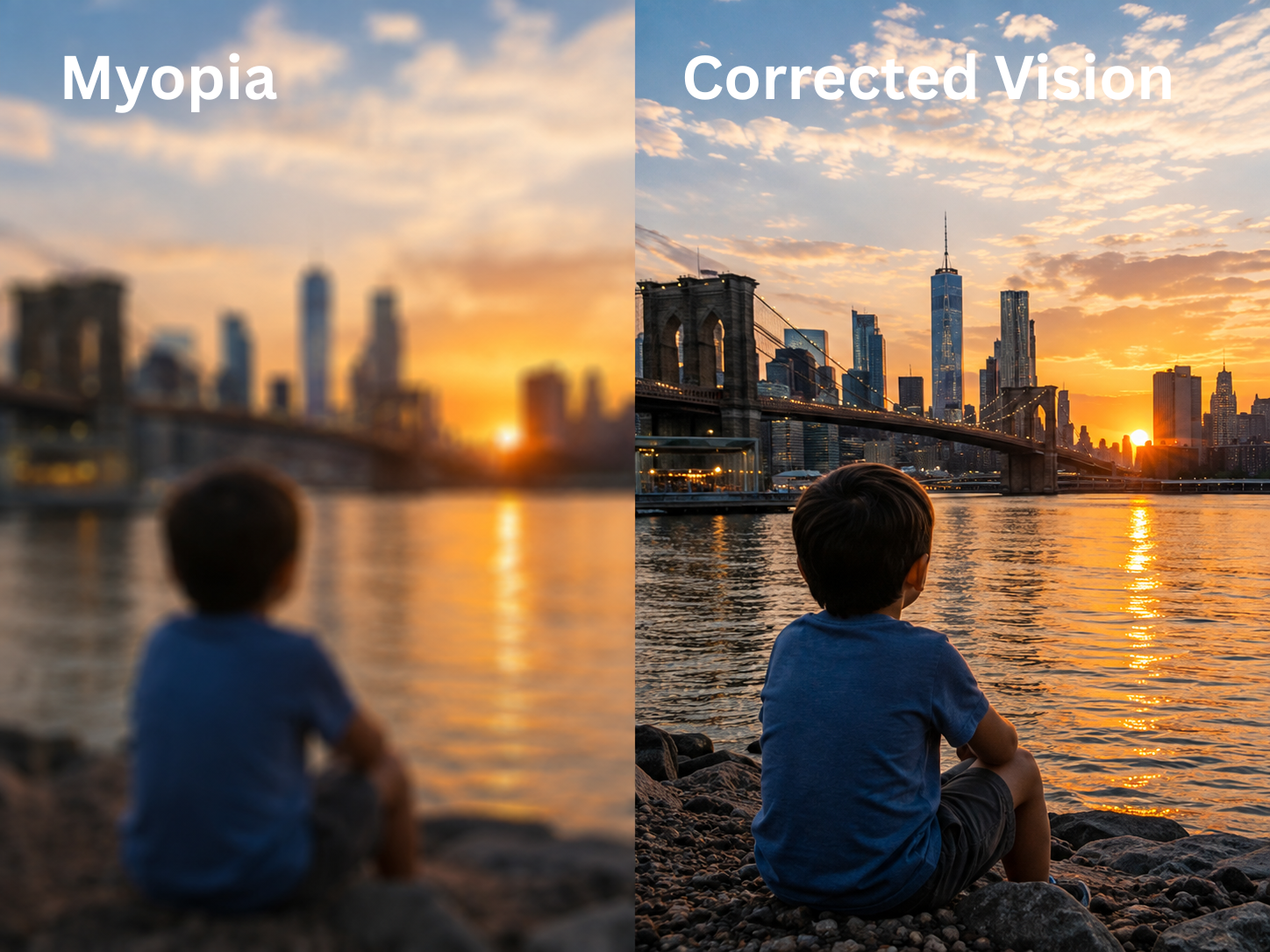
Myopia, also known as nearsightedness, is one of the most common vision conditions in children. While glasses and contact lenses can help a child see clearly, they do not necessarily stop myopia from progressing.
Myopia control, also called myopia management, uses specialized treatments and healthy visual habits designed to slow the progression of nearsightedness and excessive eye growth.
At AJ Kew Gardens Optical, we provide myopia control options for children whose prescriptions are increasing over time. Early monitoring and treatment can help protect your child's vision as they grow.
What Is Myopia?
Myopia occurs when distant objects appear blurry while objects up close are easier to see. This can happen when the eye is too long or when the eye's focusing system causes light to focus in front of the retina instead of directly on it.
Myopia often begins during childhood and may become stronger as a child grows.
Standard glasses and contact lenses can correct blurry vision, but they do not necessarily slow the underlying progression of myopia. Myopia control focuses on slowing how quickly the prescription increases and limiting excessive elongation of the eye.
Why Does Myopia Control Matter?
A child's eyes continue to grow throughout childhood. When myopia progresses, the eye can become increasingly elongated.
The younger a child develops myopia and the faster it progresses, the greater the likelihood of developing higher levels of myopia later in life.
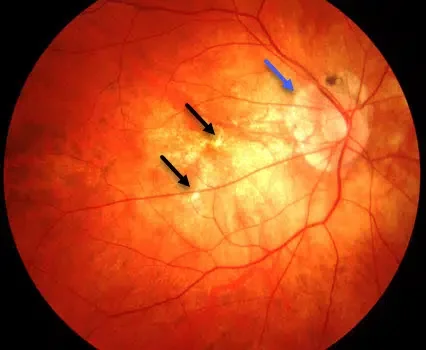
Higher levels of myopia are associated with an increased lifetime risk of certain eye conditions, including retinal detachment, myopic macular changes, glaucoma, and other complications.
For this reason, early detection and myopia management are important parts of children's eye care.
If your child's glasses prescription seems to become stronger every year, talk with your eye doctor about whether myopia control may be appropriate.
What Can Increase the Risk of Myopia?
Several factors may contribute to the development and progression of myopia in children.
Family History
Children with one or both parents who have myopia have an increased risk of developing nearsightedness themselves.
Limited Outdoor Time
Spending regular time outdoors has been associated with a lower risk of developing myopia. Encouraging children to spend time outside can be an important part of healthy visual habits.
Extensive Near Work
Reading, homework, computers, tablets, and other activities that require prolonged near focus may be associated with myopia development and progression.
Children should take regular breaks during extended periods of near work and maintain a comfortable working distance from books and screens.
How Is Myopia Progression Monitored?
A comprehensive eye examination allows your optometrist to evaluate your child's vision, prescription, and overall eye health.
Depending on your child's age and individual circumstances, myopia monitoring may include:
Visual acuity testing
Refraction to determine the glasses prescription
Dilated eye examination
Corneal measurements
Axial length measurements, when available
Tracking prescription changes over time
Monitoring your child's prescription across multiple eye exams helps your eye doctor determine whether myopia is progressing and whether myopia-control treatment may be appropriate.
Myopia Control Options for Children
There are several approaches to managing progressive myopia in children. The appropriate option depends on factors such as your child's age, prescription, rate of progression, lifestyle, and ability to follow the treatment plan.
At AJ Kew Gardens Optical, we understand that eye injuries can happen unexpectedly. Our experienced optometrists provide comprehensive eye evaluations to determine the extent of your injury and recommend the appropriate next steps. Whether you have debris in your eye, persistent irritation, or concerns after a workplace eye injury, we're here to help protect your vision.
If you've experienced a foreign body in your eye and need an experienced eye doctor in Kew Gardens, NY, contact AJ Kew Gardens Optical today to schedule an evaluation. Prompt treatment can help prevent complications and preserve your long-term eye health.
Myopia-Control Spectacle Lenses
Specially designed spectacle lenses can provide clear central vision while creating an optical signal intended to slow excessive eye growth.
One example is the Essilor Stellest lens, a myopia-control spectacle lens that uses highly aspherical lenslets surrounding the central vision zone.
For children who already wear glasses or are good candidates for full-time spectacle wear, myopia-control lenses can be a convenient option because the treatment is incorporated directly into their everyday glasses.
Stellest lenses are one of the myopia-control options available at AJ Kew Gardens Optical.
Low-Dose Atropine Eye Drops
Low-dose atropine is a prescription eye drop that may be used to help slow myopia progression in children.
Different concentrations of atropine have been studied for myopia control. Effectiveness and potential side effects can vary depending on the concentration and the individual child.
Possible effects can include:
Increased pupil size
Light sensitivity
Difficulty with near focusing
These effects are generally less pronounced with lower concentrations.
Low-dose atropine may be used once daily according to the treatment plan prescribed by your child's eye doctor.
Low-dose atropine is another myopia-control option available through AJ Kew Gardens Optical.
Your eye doctor will determine whether atropine is appropriate and which concentration best fits your child's needs.
Myopia-Control Contact Lenses
Certain specially designed soft contact lenses may help slow myopia progression.
These lenses use specific optical designs that provide clear central vision while creating peripheral myopic defocus.
Some multifocal and dual-focus contact lenses have demonstrated an ability to slow myopia progression and axial elongation in children.
Contact lenses require careful hygiene and responsible handling. Your child's age, maturity, and ability to follow proper lens-care instructions are important considerations when determining whether contact lenses are appropriate.
Orthokeratology (Ortho-K)
Orthokeratology, commonly called ortho-K, uses specially designed rigid contact lenses worn overnight to temporarily reshape the cornea.
The lenses are removed in the morning, and some children can see clearly throughout the day without wearing glasses or contact lenses.
Research suggests that ortho-K can slow myopia progression in some children. However, because the lenses are worn overnight, careful hygiene and regular follow-up are especially important.
Contact lens complications, including corneal infections, can occur if lenses are not properly cared for.
Ortho-K is not offered at every eye care practice. Your eye doctor can determine whether it may be an appropriate option for your child.
Can Myopia Control Treatments Be Combined?
In some children, more than one myopia-control treatment may be considered.
For example, research has examined combining myopia-control spectacle lenses with low-dose atropine, particularly for children who continue to experience progression while using one treatment alone.
Combination treatment may be appropriate for certain children, but treatment decisions should be based on your child's individual rate of progression, age, prescription, risk factors, and response to treatment.
Your eye doctor can help determine the most appropriate approach for your child.
Healthy Habits for Children With Myopia
Myopia management is not only about treatment. Healthy visual habits can also be an important part of an overall approach to children's eye health.
Encourage your child to:
Spend regular time outdoors each day.
Take breaks during prolonged reading, homework, or screen use.
Hold books and screens at a comfortable working distance.
Avoid holding screens extremely close to the face.
Maintain a healthy, balanced lifestyle.
Attend regular comprehensive eye examinations.
Healthy habits do not replace myopia-control treatment when treatment is recommended. However, they can support your child's overall eye health and visual habits.
When Should Myopia Control Be Considered?
Myopia control may be appropriate for a child with progressive myopia, particularly when their prescription is increasing noticeably over time.
Early intervention can be especially important for younger children because they have more years of eye growth ahead of them.
Consider discussing myopia management with your eye doctor if:
Your child's glasses prescription is getting stronger each year.
Your child was diagnosed with myopia at a young age.
One or both parents have myopia.
Your child spends significant time reading or using screens.
Your child spends very little time outdoors.
You are concerned about your child's increasing prescription.
Myopia Control in Kew Gardens, Queens, NY
Myopia is more than simply needing glasses to see clearly. Progressive myopia can lead to higher prescriptions and may increase the risk of certain eye conditions later in life.
Regular comprehensive eye examinations allow your optometrist to monitor your child's prescription, evaluate eye health, and track changes over time.
At AJ Kew Gardens Optical, we offer myopia control options designed to help slow the progression of nearsightedness in children. If your child's prescription has been increasing, an eye examination can help determine whether myopia management may be appropriate.
Schedule a comprehensive eye exam at AJ Kew Gardens Optical in Kew Gardens, Queens, NY to discuss your child's vision and myopia-control options.
Book Your Appointment Today
Schedule your comprehensive eye exam with the trusted optometrists at AJ Kew Gardens Optical. Whether you need a routine vision exam, contact lens fitting, or treatment for an eye concern, we're here to help you see your best.