

Medically Necessary Contact Lenses in Kew Gardens, NY | AJ Kew Gardens Optical

What Are Medically Necessary Contact Lenses?
Medically necessary contact lenses are specialty contact lenses prescribed when traditional eyeglasses or standard contact lenses cannot provide adequate functional vision because of a specific eye condition. Unlike contact lenses used primarily for convenience or cosmetic reasons, medically necessary lenses can play an important role in correcting vision affected by irregular corneas, significant differences in prescription between the eyes, absence of the natural lens, and certain eye surface conditions.
These lenses are custom-selected and fitted by an eye care professional based on your individual prescription, eye health, and the shape of your eyes. Depending on the condition being treated, options may include scleral, rigid gas permeable (RGP), hybrid, or custom soft contact lenses.
When Are Medically Necessary Contact Lenses Needed?
Standard glasses or conventional soft contact lenses work well for many people. However, certain eye conditions can create irregularities that make it difficult to achieve clear, functional vision with traditional correction.
Your eye doctor may consider specialty contact lenses when a condition affects the shape of the cornea, creates significant differences in prescription between the eyes, or affects the eye's surface.
Conditions that may require specialty or medically necessary contact lenses include:
Keratoconus
Keratoconus causes the cornea to become thinner and develop a cone-like shape. This irregular shape can cause significant distortion and irregular astigmatism that may be difficult to correct with glasses alone. RGP and scleral lenses are among the specialty lens options used for keratoconus.
Aphakia
Aphakia refers to the absence of the eye's natural lens. It can occur following cataract surgery or as a result of an injury. Contact lenses can sometimes be used to provide optical correction when appropriate.
Anisometropia
Anisometropia occurs when there is a significant difference in the prescription between the two eyes. In some cases, contact lenses can help reduce the difference in image size between the eyes compared with glasses.
Severe Dry Eye and Ocular Surface Conditions
Certain specialty lenses, particularly scleral lenses, can be used for severe dry eye and other conditions affecting the surface of the eye. A scleral lens vaults over the cornea and creates a fluid reservoir between the lens and corneal surface, which can help protect and hydrate the eye while also providing vision correction.
Corneal Scarring and Irregular Astigmatism
Injuries, infections, surgeries, and other corneal conditions can alter the normally smooth shape of the cornea. Specialty contact lenses can create a more regular optical surface, potentially improving vision when glasses or conventional lenses cannot provide adequate correction.
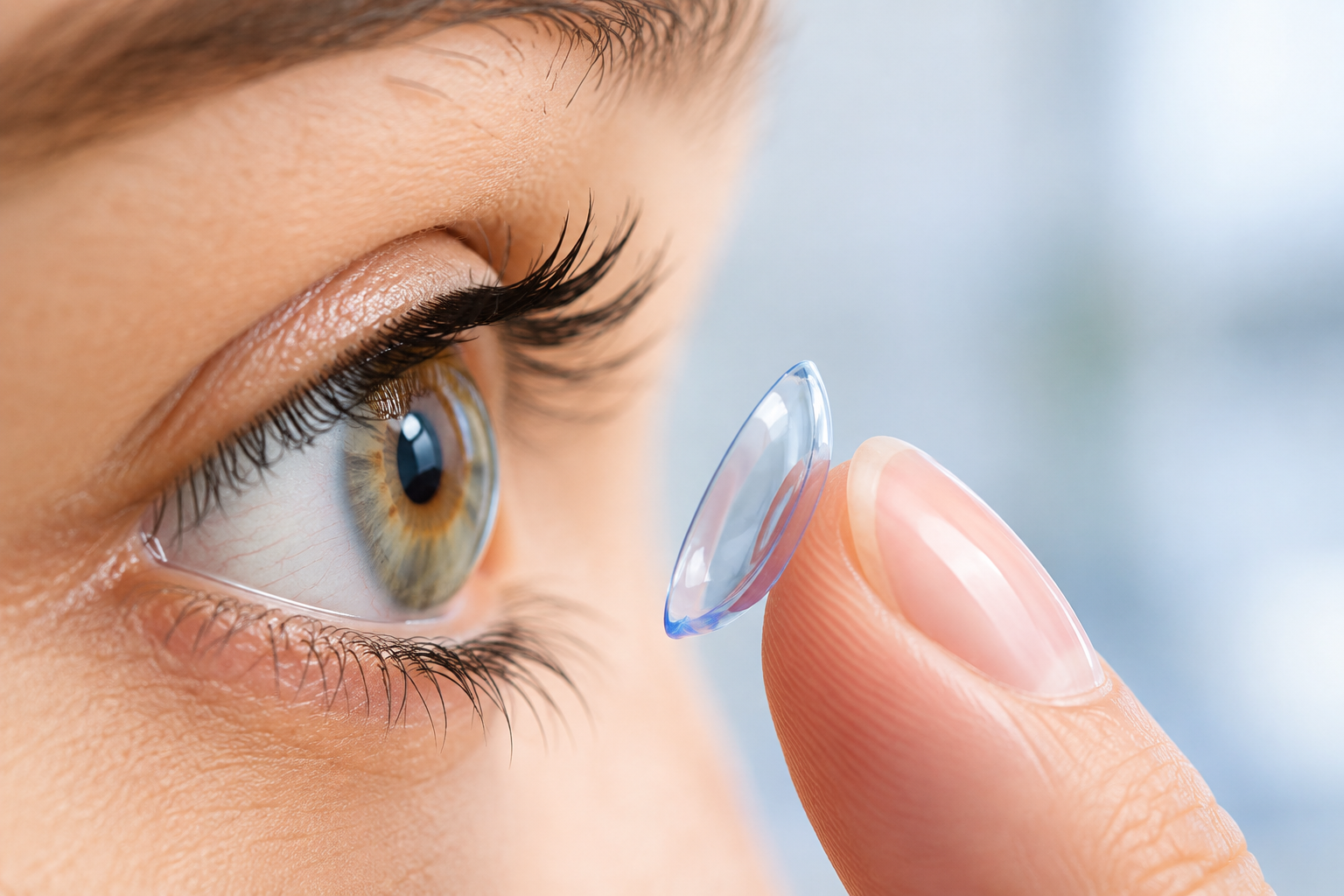
Types of Medically Necessary Contact Lenses
The best lens depends on your eye condition, prescription, corneal shape, and individual needs.
Scleral Lenses
Scleral lenses are larger rigid gas permeable lenses that rest on the sclera, or white part of the eye, rather than directly on the cornea. The lens creates a fluid reservoir over the cornea.
Because of their design, scleral lenses can provide both vision correction and support for certain corneal and ocular surface conditions, including keratoconus and severe dry eye.
Rigid Gas Permeable Lenses
RGP lenses are firm, gas-permeable contact lenses that maintain their shape on the eye. Their rigid surface can provide a smoother optical surface over an irregular cornea, making them an option for conditions such as keratoconus and irregular astigmatism.
Hybrid Contact Lenses
Hybrid lenses combine a rigid gas-permeable center with a softer outer portion. This design can provide the optical characteristics of a rigid lens while offering a different comfort profile than a traditional RGP lens. Hybrid lenses may be considered for certain irregular corneal conditions.
Custom Soft Contact Lenses
Custom soft lenses can be designed for certain prescriptions and eye conditions that require a specialized lens design. Your eye doctor can determine whether a custom soft lens is appropriate based on your individual needs.
How Are Medically Necessary Contact Lenses Fitted?
A medically necessary contact lens fitting is more involved than selecting a standard contact lens prescription.
Your eye doctor will evaluate your vision and eye health and determine which lens design is appropriate. Depending on the condition, the fitting process may involve evaluating the shape of the cornea, determining how the lens sits on the eye, assessing vision through the lens, and making adjustments to achieve an appropriate fit.
Specialty lenses can require more than one fitting or adjustment before the final lens is determined.
Are Medically Necessary Contact Lenses Covered by Insurance?
Coverage for medically necessary contact lenses depends on your insurance plan, diagnosis, and the specific criteria established by your insurance provider.
Some vision and health plans provide benefits for medically necessary contact lenses for conditions such as keratoconus, aphakia, anisometropia, corneal disorders, irregular astigmatism, and other qualifying conditions. However, coverage requirements vary, and a diagnosis alone does not necessarily guarantee coverage.
Your eye care provider may need to provide documentation of your diagnosis, prescription, and the medical reason that specialty contact lenses are necessary.
Before ordering specialty lenses, patients should contact their insurance provider to confirm their individual benefits and coverage requirements.
Who May Benefit From Medically Necessary Contact Lenses?
ou may want to discuss specialty contact lenses with your eye doctor if you:
Have keratoconus or another irregular corneal condition
Have significant irregular astigmatism
Have difficulty achieving clear vision with glasses
Have a large difference in prescription between your eyes
Have aphakia
Have severe dry eye or certain ocular surface conditions
Have corneal scarring or damage
Have previously undergone certain eye surgeries or experienced an eye injury
Not everyone with these conditions will need medically necessary contact lenses. Your eye doctor can determine whether specialty lenses are appropriate for your individual situation.
Medically Necessary Contact Lenses in Kew Gardens, NY
At AJ Kew Gardens Optical, our doctors provide comprehensive eye care and contact lens services for patients in Kew Gardens, Kew Gardens Hills, Flushing, and surrounding Queens communities.
If traditional glasses or standard contact lenses are not providing the vision you need, a comprehensive eye examination can help determine whether a specialty contact lens may be appropriate for your condition.
Contact AJ Kew Gardens Optical to schedule an eye examination and discuss your contact lens options.
Book Your Appointment Today
Schedule your comprehensive eye exam with the trusted optometrists at AJ Kew Gardens Optical. Whether you need a routine vision exam, contact lens fitting, or treatment for an eye concern, we're here to help you see your best.